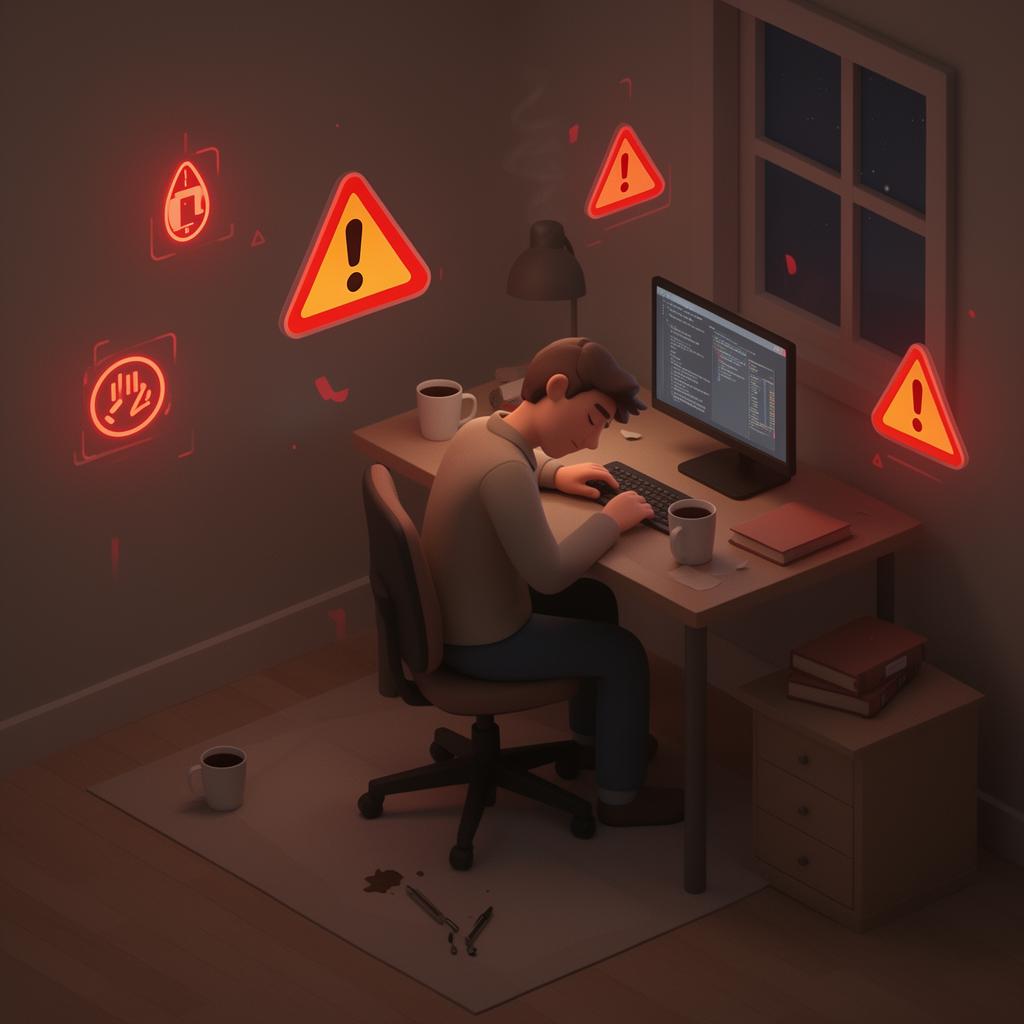
AI Burnout Detection for Engineering Teams: How It Works and Why It Matters
How AI burnout detection uses standup data, sentiment analysis, and behavioral patterns to catch engineer disengagement before it becomes attrition. A practical guide for engineering managers.
Engineering attrition is expensive. Replacing a senior engineer costs 1.5–2x their annual salary when you factor in recruiting, onboarding, and the months of lost productivity. And most of the time, the warning signs were there weeks or months before the resignation.
The problem isn't that managers don't care. It's that traditional tools — quarterly surveys, annual reviews, gut instinct — detect burnout too late to intervene. By the time an engineer "seems off" in a meeting, they've often been disengaging for weeks.
AI burnout detection changes this by analyzing the signals engineers produce every day — standup responses, communication patterns, collaboration behaviors — and flagging risk before it becomes visible to human observation.
This post explains how the technology works, what signals matter, and how engineering managers can use it practically.
If you want to start capturing the daily signals that make burnout detection possible, try Vereda AI's free Slack standup bot.
For a deeper dive into the behavioral signals themselves, see our guide to spotting burnout signals in engineering teams.
Why Traditional Burnout Detection Fails for Engineers
Most organizations rely on one of three approaches to detect burnout:
1. Periodic engagement surveys
Quarterly or biannual surveys provide a snapshot, but engineers who are actively burning out often don't flag it in a survey. They're either too busy, too cynical about the process, or not yet aware they're burning out. By the time the next survey cycle rolls around, you've lost 3–6 months of signal.
2. Manager intuition
Good managers notice when someone seems disengaged. But human pattern recognition is limited by attention, memory, and the number of direct reports. A manager with 8 engineers can't track subtle behavioral changes across all of them simultaneously — especially in remote or hybrid teams where face-to-face cues are limited.
3. Exit interviews
By definition, these happen after you've already lost the person. Exit interviews are autopsies, not prevention.
All three approaches share the same fundamental flaw: they're reactive. AI burnout detection is proactive — it analyzes continuous signals rather than waiting for periodic check-ins or visible crisis.
How AI Burnout Detection Actually Works
AI burnout detection isn't a single algorithm — it's a system that combines multiple signal types into a longitudinal risk assessment. Here's what's happening under the hood:
Signal Collection
The foundation is daily data capture. Async standups are the richest source because they're frequent, text-based (analyzable), and part of the existing workflow. Each standup response contains:
- Content signals — what the engineer is working on, what's blocking them, what they accomplished
- Sentiment signals — the emotional tone of the response (positive, neutral, negative, frustrated)
- Engagement signals — response length, detail level, timeliness, whether they responded at all
Baseline Establishment
The AI builds a behavioral profile for each engineer over their first 2–4 weeks. This establishes their "normal" — how long their responses typically are, what sentiment range they operate in, how often they mention blockers, when they usually respond. This is critical because burnout is relative to the individual, not an absolute threshold.
Deviation Detection
Once a baseline exists, the system monitors for sustained deviations:
- Response length drops 40%+ over 2 weeks
- Sentiment trends negative for 5+ consecutive standups
- Blocker mentions increase without resolution
- Response timing shifts significantly (much earlier or later than usual)
- Engagement becomes formulaic (copy-paste responses, "no blockers" every day)
Multi-Signal Correlation
The key insight is that no single signal is diagnostic. A short standup response means nothing. But short responses + declining sentiment + repeated blockers + later response times = a pattern worth investigating. The AI weighs these signals together and generates a risk score.
The Signals That Matter Most
Not all behavioral signals carry equal weight for burnout prediction. Based on patterns across engineering teams, here's what correlates most strongly with burnout and eventual attrition:
Tier 1: Strongest Predictors
- Sustained sentiment decline — A gradual shift from positive/neutral to consistently negative language over 2+ weeks. This is the single strongest early signal.
- Standup silence — An engineer who was consistently engaged suddenly stops responding or becomes intermittent. Silence isn't always burnout — but unexplained silence almost always means something.
- Repeated unresolved blockers — Mentioning the same blocker 3+ times without escalating or resolving it suggests learned helplessness, a hallmark of burnout.
Tier 2: Supporting Signals
- Response brevity — Shorter, less detailed updates over time indicate declining engagement with the team communication process.
- Formulaic responses — "Working on X. No blockers." repeated daily suggests going through the motions rather than genuinely communicating.
- Timing shifts — Consistently later or earlier responses can indicate work-life boundary erosion or avoidance.
Tier 3: Context Signals
- Sprint overload patterns — Consistently carrying more work than peers without acknowledgment
- Isolation from collaboration — Reduced participation in code reviews, discussions, or voluntary activities
- Language changes — Shift from "we" to "I" language, or from solution-oriented to problem-focused framing
What AI Burnout Detection Is Not
It's important to be clear about what this technology doesn't do:
It's not surveillance. AI burnout detection analyzes data engineers are already sharing through standups and work tools. It doesn't monitor keystrokes, track screen time, or read private messages. The input is the same information a manager would see — just analyzed more consistently.
It's not a diagnosis. The system flags risk patterns, not medical conditions. An alert means "this person's behavior has changed in ways that correlate with burnout" — not "this person is burned out." The manager still needs to have the conversation.
It's not a replacement for management. AI detects signals. Humans respond. The technology is most valuable when it triggers a thoughtful 1:1 conversation, not when it generates an automated alert that gets ignored.
It's not punitive. Burnout signals should never be used in performance evaluations or disciplinary processes. The entire value of the system depends on engineers trusting that their standup data is being used to help them, not evaluate them.
Practical Implementation for Engineering Managers
If you're interested in using AI burnout detection with your team, here's a practical approach:
Step 1: Start with async standups
You can't detect patterns without data. Async standups in Slack are the lowest-friction way to start capturing daily signals. Run them for 2–4 weeks to build baselines before expecting actionable insights.
Step 2: Establish trust with your team
Be transparent about what you're doing and why. "I'm using standup data to help me notice when people are struggling so I can support them earlier" is very different from "I'm monitoring your performance through standups." Frame it as a support tool, not a tracking tool.
Step 3: Respond to signals with curiosity, not judgment
When the system flags someone, your next step is a private conversation — not an assumption. "I noticed you've seemed more frustrated in your updates recently. What's going on?" opens a door. "Your standup engagement metrics are declining" closes it.
Step 4: Act on what you learn
Burnout detection is only valuable if it leads to action. If every flagged conversation results in "let me know if you need anything," engineers will stop trusting the process. Redistribute work, remove blockers, adjust expectations, or escalate systemic issues.
Step 5: Track team health over time
Use burnout detection data to identify patterns at the team level, not just the individual level. If multiple engineers show stress signals during the same sprint, the problem is likely the workload or the project, not the people.
The ROI of Early Detection
The business case for AI burnout detection is straightforward:
- Attrition cost: Replacing a senior engineer costs $150K–$300K (recruiting, onboarding, ramp-up, lost productivity). Preventing one departure per year pays for the tool many times over.
- Productivity recovery: Engineers caught early in burnout can recover in 2–4 weeks with the right support. Engineers caught late often need months — or leave entirely.
- Team stability: One departure triggers a cascade — remaining engineers absorb extra work, increasing their own burnout risk. Early detection breaks this cycle.
- Manager effectiveness: Instead of spending time guessing who needs attention, managers get signal-driven prioritization for their 1:1 conversations.
The most expensive burnout is the one you don't see coming. AI burnout detection doesn't eliminate burnout — but it gives engineering managers the visibility to intervene while the situation is still recoverable.