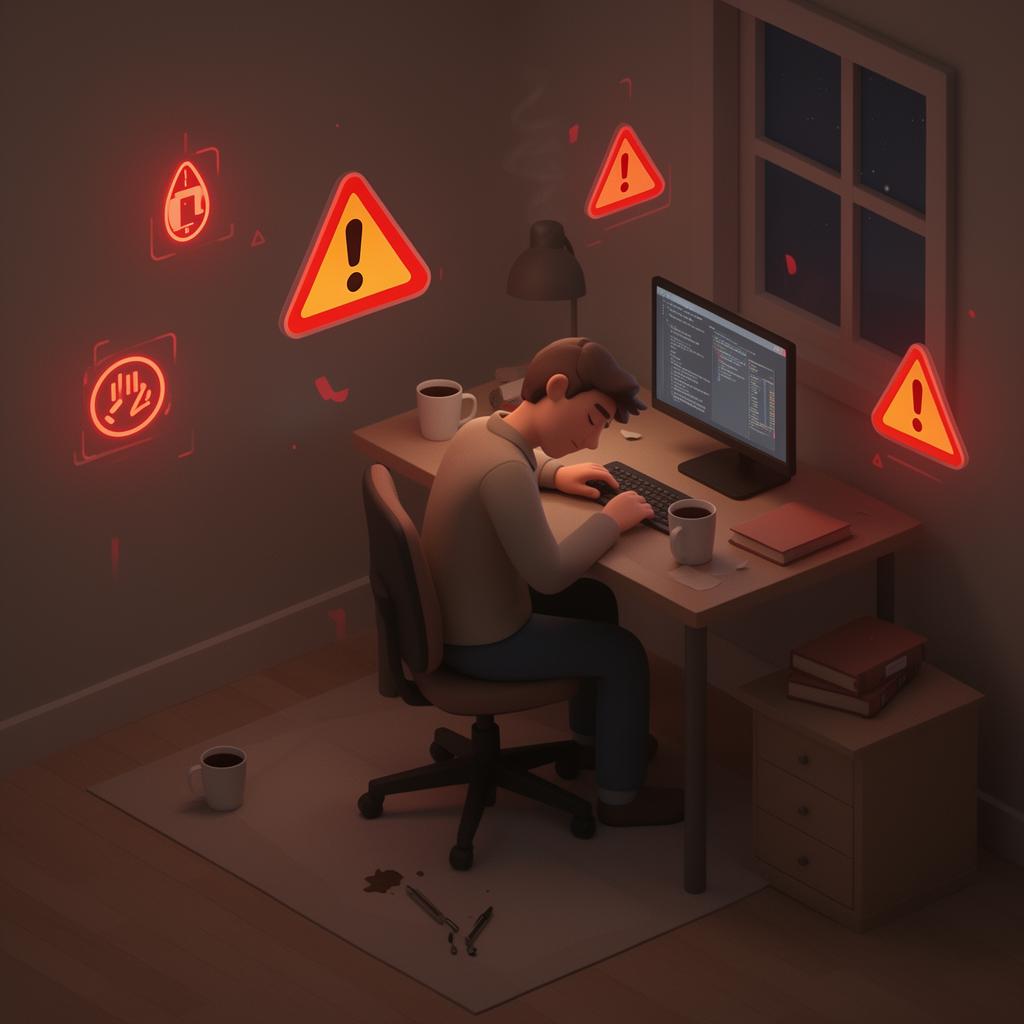
Spotting Burnout in Engineering Teams: Early Warning Signs
Engineers don't announce burnout — they go quiet. Here's how to read standup patterns, PR velocity, and Slack signals before someone quits.
Burnout rarely happens overnight. It creeps in slowly, eroding motivation and creativity until you have a disengaged team — or worse, attrition. As an engineering manager, spotting burnout early is one of the most powerful things you can do to keep your team healthy and productive.
But here's the catch: burnout signals are subtle, distributed, and easy to miss if you rely only on what you see firsthand. Managers can't watch every Slack thread, pull request, or deployment. That's why turning to data — and increasingly, AI-powered pattern detection — is becoming essential for modern leadership.
One of the easiest places to start: a free Slack standup bot that captures daily signals you can analyze for early warning signs.
Why Data is Your Best Early Warning System
Traditional burnout detection relies on verbal cues: a developer saying they're tired, showing frustration in a retro, or asking for time off. But many engineers stay quiet until they've already hit a breaking point.
Behavioral data tells a different story. By looking at patterns across work activity, you can spot stress signals before they escalate into burnout. The key is knowing what to look for — and not letting these signals slip through the cracks.
The 6 Behavioral Signals That Predict Burnout
Through analyzing thousands of engineering teams, certain patterns consistently appear weeks before burnout becomes visible. Here are the six most reliable early warning signals:
1. Declining Standup Engagement
Healthy engineers provide detailed, forward-looking standup updates. Burned-out engineers shift to minimal responses: "Working on X," "Same as yesterday," or missing standups entirely. This isn't laziness — it's emotional withdrawal from team connection.
2. Shorter, Less Detailed Responses
Pay attention to response length in standups, code reviews, and Slack conversations. Engineers approaching burnout often switch from thoughtful, contextual communication to brief, transactional responses. They're conserving emotional energy.
3. Increased Negativity in Communication
Subtle language shifts appear first: "This is impossible" instead of "This is challenging." "The code is broken" instead of "There's a bug here." "Management doesn't understand" instead of "We need to clarify requirements." The negativity isn't about the work — it's about their capacity to handle it.
4. Withdrawal from Code Reviews
Burnout often shows up first in peer collaboration. Engineers stop volunteering for reviews, provide shorter feedback, or become unusually critical. Code review is optional effort, so it's one of the first things to decline when energy is low.
5. Schedule Changes and Availability Shifts
Watch for changes in working patterns: logging in later, logging out earlier, less activity during typical collaboration hours. This can signal an attempt to create boundaries when internal boundaries have eroded.
6. Repeated Blockers Without Escalation
Burned-out engineers often mention the same blockers multiple days without actively seeking help. It's learned helplessness: they've stopped believing solutions are possible, so they stop fighting for them.
The key is longitudinal pattern recognition. One bad day isn't burnout. But three weeks of declining standup engagement combined with shorter responses and withdrawal from reviews? That's a trend worth addressing.
How AI Detects What Humans Miss
Human managers are pattern recognition machines, but we're limited by memory, attention, and cognitive load. We might notice when someone seems "off" in a meeting, but we miss the gradual decline in code review participation or the subtle negativity creeping into their language.
AI excels at exactly what humans struggle with: consistent monitoring and longitudinal analysis.
Sentiment Analysis Over Time
AI can track emotional tone across hundreds of interactions — standup updates, code review comments, Slack messages — and identify trends invisible to human observation. A 15% decline in positive language over three weeks isn't obvious day-to-day, but it's a clear signal in aggregate.
Behavioral Pattern Detection
AI notices when someone's typical work rhythms change: fewer pull requests, delayed response times, reduced collaboration. It can flag the engineer who used to volunteer for challenging tasks but hasn't raised their hand in two weeks.
Cross-Signal Correlation
Most importantly, AI can identify when multiple signals align. Declining standup engagement alone might mean nothing. Combined with shorter code review responses and reduced Git activity, it becomes a clear early warning.
Human intuition is still essential for interpretation and response. But AI provides the continuous monitoring and pattern detection that makes early intervention possible.
Practical Steps Managers Can Take
Once you identify burnout signals, what do you actually do? Here's a practical framework:
Immediate Response (Week 1)
- Schedule a private conversation — not your regular 1:1, but a dedicated check-in focused on workload and well-being
- Ask direct questions: "How are you feeling about your current workload?" "What's been most frustrating lately?" "What would make your work more sustainable?"
- Listen for context, not just solutions — burnout often has multiple contributing factors
Short-term Adjustments (Weeks 2-4)
- Redistribute high-stress work — move complex, ambiguous, or politically sensitive tasks to other team members temporarily
- Create quick wins — assign tasks where success is clear and achievable to rebuild confidence
- Reduce meeting load — protect their calendar for focused work time
- Pair them with a trusted colleague for collaboration and support
Long-term Prevention (Ongoing)
- Regular workload audits — use performance data to ensure work distribution is sustainable
- Improve role clarity — burnout often stems from unclear expectations or constantly shifting priorities
- Build team buffer capacity — prevent burnout by ensuring no single person is critical to every important project
The goal isn't to eliminate all stress — engineering work is inherently challenging. The goal is to intervene before temporary stress becomes chronic burnout.
A Real-World Scenario: Sarah's Story
Sarah is a senior engineer on your team. She's always been reliable, thoughtful in code reviews, and active in planning sessions. But over the past month, you've noticed some changes:
- Her standup updates have gotten shorter: "Working on the payment service" instead of her usual detailed breakdowns
- She's been slower to respond to code review requests
- In team chat, her responses have become more terse
- She's mentioned being "blocked on the API integration" for three days without asking for help
Individually, none of these signals screams "burnout." Sarah isn't complaining, missing deadlines, or asking for time off. She's still productive. But the pattern suggests declining engagement.
Without AI: You might notice she seems "a bit off" but likely wouldn't intervene until something more obvious happens — missed deadlines, visible frustration, or a direct request for help.
With AI-powered analysis: The system flags the correlation between declining standup engagement, reduced collaboration, and repeated blockers. You get an early warning: "Sarah's engagement patterns suggest increased stress. Consider a wellness check-in."
You schedule a private conversation. It turns out she's been struggling with the ambiguity of the payment integration project, feeling like she's working in a vacuum without clear requirements. She hasn't asked for help because she doesn't want to seem incompetent.
The intervention: You clarify requirements with the product team, pair her with another engineer familiar with the payment system, and commit to weekly check-ins on the project. Two weeks later, her engagement patterns return to normal, and the project ships successfully.
The outcome: Early detection prevented a capable engineer from burning out and potentially leaving. Instead of losing Sarah or dealing with months of reduced productivity, you addressed the root cause while it was still manageable.
How Vereda AI's Burnout Detection Works
Vereda AI treats burnout detection as a continuous monitoring challenge, not a periodic survey. Here's how it works:
Daily Signal Capture
- Standup analysis — tracks engagement level, response length, sentiment, and communication patterns
- Code activity monitoring — observes pull request frequency, review participation, and collaboration signals
- Communication pattern analysis — analyzes tone, responsiveness, and interaction quality across Slack and other tools
Pattern Recognition
- Baseline establishment — learns each engineer's normal patterns of work and communication
- Deviation detection — flags when behavior differs significantly from established norms
- Trend analysis — identifies gradual changes over weeks, not just day-to-day fluctuations
Intelligent Alerting
- Risk scoring — combines multiple signals into a burnout risk assessment
- Contextual alerts — provides specific details about what patterns changed and when
- Action recommendations — suggests specific intervention strategies based on the type of signals detected
Manager Dashboard
- Team health overview — see all team members' engagement trends at a glance
- Individual deep dives — drill down into specific patterns for any team member
- Historical context — understand how current patterns compare to past performance
The goal is to make burnout detection systematic rather than accidental. Instead of hoping you notice warning signs, you get consistent, data-driven alerts that enable early intervention.
Learn more about how Vereda AI's burnout detection can protect your team.
The Future of Healthy Engineering Teams
Burnout prevention will increasingly rely on proactive, data-informed management. By combining behavioral signals with AI-driven alerts, you can stop treating burnout as something to react to — and start preventing it before it happens.
Healthy teams build better products, retain talent longer, and create more sustainable cultures. The sooner we get better at spotting the warning signs, the more resilient our organizations will be.
The next frontier isn't just detecting burnout — it's preventing it entirely through better workload distribution, clearer expectations, and teams designed for sustainability rather than just velocity.
Engineering management is evolving from reactive leadership to predictive leadership. The managers who embrace data-driven early warning systems will build stronger, more resilient teams while the ones who rely on intuition alone will continue losing their best people to preventable burnout.
For more insights on related topics, read our guide to reducing annual review stress and learn about conducting effective 1:1 meetings that support team well-being.